
That old credit card sits in the back of your wallet, untouched for years. It’s a relic from your past, maybe from your first job or a long-forgotten retail store. The temptation to finally cut it up, call the bank, and “clean up” your financial life is strong. It feels like a responsible, organized step.
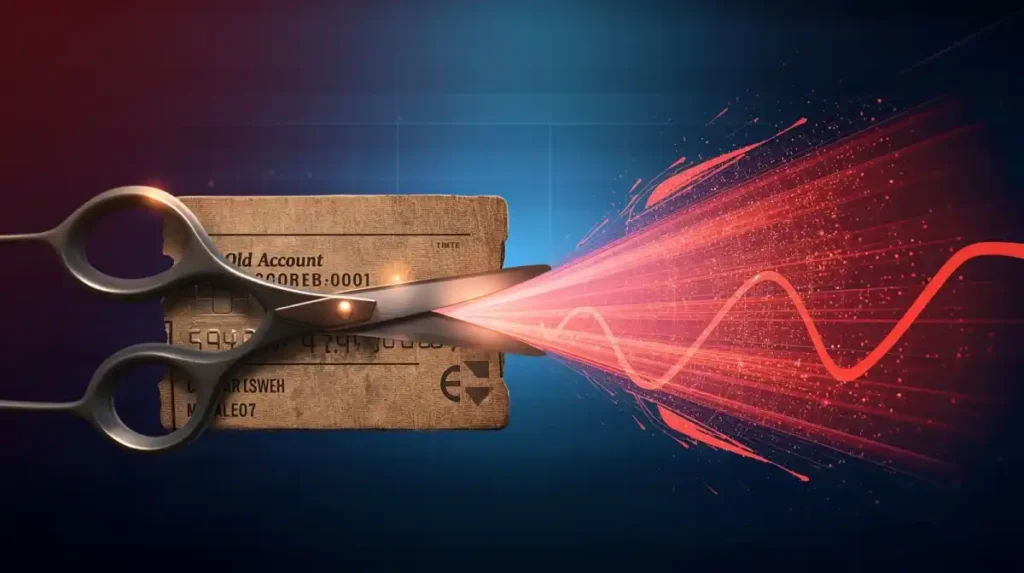
What if we told you that this act of financial tidiness could be one of the most damaging moves for your credit score?
That dusty card isn’t just clutter; it’s a silent guardian of your financial reputation. Closing it might feel satisfying, but it can trigger a chain reaction that hurts the two most important factors in your FICO score. Let’s break down why this common myth is so perilous and what you should do instead.
The Myth: Closing Cards Improves Your Score
This belief comes from a place of good intentions. People close cards for a few understandable reasons:
- To Reduce Temptation: “If I close it, I can’t spend on it.”
- To Simplify Finances: “One less account to worry about monitoring.”
- A Misguided Sense of “Too Many Cards”: “I heard that having too many open accounts looks bad to lenders.”
The underlying feeling is that a simpler credit profile must be a better one. Unfortunately, the FICO scoring model doesn’t see it that way.
The Reality: The Two Devastating Impacts of Closing a Card
When you close a credit card, especially an old one, you aren’t just removing clutter—you’re dismantling key pillars of your credit score.
Impact 1: Your Utilization Ratio Will Likely Spike
This is the most immediate and damaging effect. Your credit utilization is the ratio of your total balances to your total credit limits. Closing a card removes its credit limit from your total available credit, causing your utilization percentage to jump overnight.
A Real-World Example:
- Before Closing: You have two cards.
- Card A: $5,000 limit, $500 balance
- Card B (The Old Card): $5,000 limit, $0 balance
- Total Credit: $10,000
- Total Balance: $500
- Your Utilization: 5% (Excellent!)
- After Closing Card B:
- Total Credit: $5,000 (You just lost half your available credit!)
- Total Balance: $500
- Your Utilization: 10% (Still good, but a 100% increase!)
Now, imagine if you had a larger balance. That same $500 balance with only a $2,000 total limit would be a damaging 25% utilization. This single move can easily drop a good score by 20-40 points.
Impact 2: Your Credit History Will Shrink
The length of your credit history determines 15% of your FICO score. The scoring model loves to see old, well-managed accounts.
- The Age Factor: FICO considers the age of your oldest account and the average age of all your accounts.
- The Closed-Account Clock: Here’s the critical part: a closed account will eventually stop contributing to your average age of accounts. It doesn’t happen immediately—it will stay on your report and age for about 10 years—but when it finally falls off, your average account age will suddenly plummet. If it was your oldest card, the damage will be even more severe.
By closing an old card, you are essentially chopping down the oldest tree in your credit forest, and eventually, the shade it provided will be gone.
Your Practical Strategy: What to Do Instead of Closing
The goal is to keep the benefits of the card without the hassle. Here’s your action plan.
- Keep It Open and Use the “Sleeping Card Strategy”: Your best move is to do almost nothing, but with a small twist. To prevent the issuer from closing the card due to inactivity, put it to minimal use.
- The $1 Rule: Every 6-12 months, use the card for a tiny, necessary purchase—like a streaming subscription or a tank of gas.
- Set Up Autopay: Ensure you have autopay enabled to pay the full statement balance, so you never accrue interest or forget a payment.
- This tiny bit of activity keeps the account “active” in the issuer’s eyes, preserving its age and its precious credit limit for your utilization ratio.
- Manage an Annual Fee, Don’t Surrender: If the card has an annual fee, don’t just close it.
- Call and Ask to Product Change: Politely call the issuer and ask if you can “product change” or “downgrade” the card to a no-fee version from the same bank. This preserves your credit history and limit while eliminating the cost. This is a win-win.
- Secure the Card, Don’t Cut It Up: If you’re truly worried about temptation, simply cut up the physical card or lock it in a safe. Removing the card from your digital wallet is enough. The account can still work for you behind the scenes without posing a risk.
