
You’ve been using your credit card responsibly—paying on time, keeping balances low, and maintaining a good credit score. Now you’re ready to request a credit limit increase. But when the bank asks for your bank account statements and financial documents, you might wonder: “Isn’t my excellent credit score enough?”
The reality is that while your credit score tells the bank about your past financial behavior, your bank account details reveal your current financial health and future repayment capacity. Understanding what banks look for can significantly increase your chances of approval.
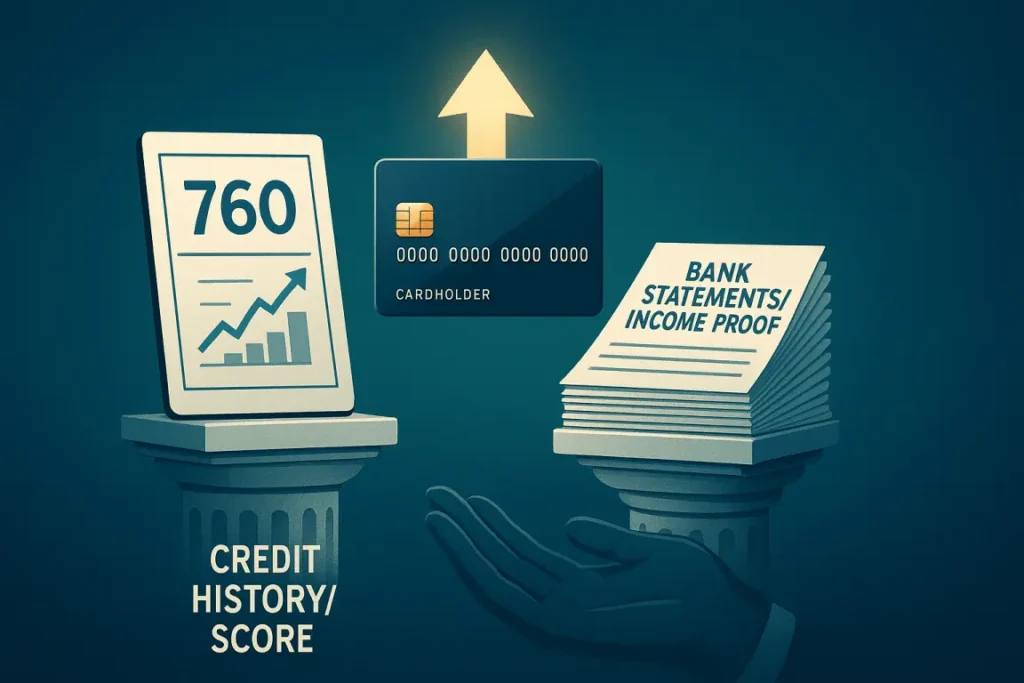
Why Banks Need More Than Just Your Credit Score
Your credit score is crucial, but it only tells part of the story. Banks need to assess your complete financial picture because:
- Credit scores reflect history, not current cash flow
- Bank statements show actual repayment capacity
- Income verification ensures you can handle increased credit
- Risk management requires comprehensive financial assessment
Think of it this way: your credit score shows you’ve been responsible with credit in the past, but your bank statements prove you have the current financial strength to handle more credit responsibly.
🔎 What Banks Really Look For in Your Bank Statements
When reviewing your financial documents, banks analyze specific data points that reveal your financial habits and stability:
Key Financial Indicators Banks Analyze
| Data Point | Why It Matters to Banks |
|---|---|
| Regular Monthly Deposits | Confirms stable income and verifies your stated annual earnings—the primary basis for determining your new limit |
| Account Average Balance | Demonstrates financial liquidity and your ability to handle emergencies while making payments |
| Overdraft Fees/Negative Balances | Immediate red flag indicating financial instability—can cause instant rejection |
| Large Transactions | Helps banks understand your spending patterns and overall financial picture |
| Consistent Balance Patterns | Shows financial discipline and reliable cash flow management |
The Hidden Clues Banks Decode
- Payroll Deposits: Regular, consistent deposits from recognizable employers build confidence
- Spending Patterns: Erratic large withdrawals or gambling transactions raise concerns
- Overdraft History: Frequent overdrafts signal poor cash management
- Savings Behavior: Growing balances demonstrate financial responsibility
📋 Essential Documents for Credit Limit Increase in the US
The specific documents required vary by bank and request method, but generally include:
1. Income Verification Documents
For W-2 Employees:
- Recent pay stubs (typically 2-3 most recent)
- W-2 forms from previous year
- Employment verification letter
- Bank statements showing direct deposits
For Self-Employed Individuals:
- 2 years of personal and business tax returns (1040 with Schedule C)
- 6-12 months of business bank statements
- Profit and loss statements
- 1099 forms if applicable
2. Identity and Address Verification
- Government-issued ID (driver’s license, state ID, or passport)
- Social Security card or number
- Utility bills (less than 60 days old)
- Lease agreement or mortgage statement
- Voter registration card
3. Bank Account Information
- 2-3 months of checking and savings account statements
- Investment account statements (in some cases)
- Retirement account statements (for established customers)
- All active loan and credit card statements
4. Additional Financial Information
- Details of existing loans (mortgage, auto, student, personal)
- Current monthly debt obligations
- Investment portfolios
- Other credit card limits and utilization rates
💡 3-Step Strategy to Maximize Your Approval Chances
Don’t just submit documents—prepare your financial profile to make approval inevitable.
Step 1: Optimize Your Credit Utilization
30 Days Before Applying:
- Reduce your overall credit utilization below 10%
- Implement the AZEO (All Zero Except One) strategy
- Ensure no single card exceeds 30% utilization
- Avoid new credit applications
Why this works: Banks want to see that you’re responsible with your current limits before giving you more credit. Low utilization demonstrates excellent credit management skills.
Step 2: Update and Verify Your Income
Before Submitting Your Request:
- Update your income information in your bank’s online portal
- Ensure your stated income matches your documented income
- Gather recent pay stubs or tax documents
- Consider timing your request after a salary increase
Pro tip: If you’ve recently changed jobs or received a raise, include a brief explanation and supporting documentation.
Step 3: Clean Up Your Bank Accounts
90-Day Preparation Period:
- Maintain consistent minimum balances
- Avoid overdrafts and returned payments
- Ensure regular payroll deposits are visible
- Reduce large, unexplained transactions
- Build your savings balance gradually
Key strategy: Banks typically review 2-3 months of statements. Plan ahead to present a clean, consistent financial picture.
Common Mistakes That Get Applications Denied
- Inconsistent Information: Income stated doesn’t match documents
- Poor Timing: Applying during financial stress periods
- Incomplete Documentation: Missing required paperwork
- Recent Credit Applications: Multiple hard inquiries on your report
- High Utilization: Current cards near their limits
Special Considerations for Different Applicant Types
For Young Professionals:
- Emphasize career growth and future earning potential
- Highlight educational qualifications
- Show consistent savings patterns
For Self-Employed Applicants:
- Provide comprehensive business documentation
- Demonstrate consistent income across multiple years
- Explain business cycles and seasonal variations
For Existing Banking Customers:
- Leverage your relationship history
- Highlight consistent account maintenance
- Reference long-term banking patterns
Digital Submission Best Practices
When submitting documents online:
- Ensure clear, readable scans
- Name files logically (e.g., “John_Smith_Paystub_Jan2024.pdf”)
- Follow size and format requirements
- Keep copies of all submitted documents
- Note submission confirmation numbers
What to Do If Your Request is Denied
- Ask for specific reasons for denial
- Wait 3-6 months before reapplying
- Address the cited issues directly
- Build your financial profile during the waiting period
- Consider starting with a smaller increase request
The Bottom Line: Transparency Builds Trust
Banks aren’t just looking for reasons to deny you—they’re trying to find reasons to approve you. The more transparent and organized your financial documentation, the easier you make their decision-making process.
Remember: Your bank account statements don’t just show you have money; they show you manage money responsibly. That’s ultimately what banks want to see.
Ready to See How a Higher Limit Could Transform Your Credit Utilization?
Wondering how much a credit limit increase could improve your utilization ratio? Our calculator shows you exactly how different limit scenarios would impact your credit health.
Pro Tip: Use the calculator before applying to determine the ideal limit increase that would optimize your utilization without raising concerns about overextension.
